
Smart Greenhouses
How the Internet of Things Empowers Greenhouse Management
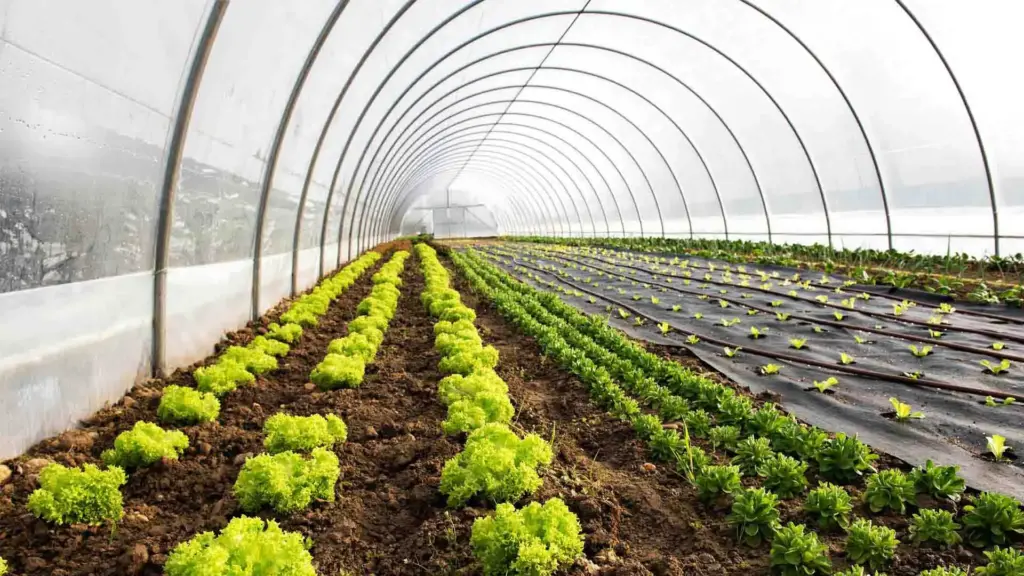
How the Internet of Things Empowers Greenhouse Management
How can farmers be sure that frost or a cold night won’t harm the conditions inside their greenhouses? For instance, growing mushrooms requires a reliable system for monitoring and regulating microclimate parameters. As long as farmers manually collect temperature, air quality, and soil humidity readings, climate control systems will rely on inaccurate data. Since irrigation, ventilation, and heating depend on real-time environmental parameters, any irregular or human-error-prone data directly affects crop yield.
To avoid manually adjusting the greenhouse microclimate, smart farming automates data collection: temperature and soil humidity, light levels, and CO₂ concentration in the air. For greater efficiency, farmers can automate irrigation, lighting, ventilation, and heating based on accurate real-time data.
If full greenhouse automation seems too expensive or has been postponed indefinitely, it’s worth exploring the Internet of Things (IoT) — and specifically LoRaWAN technology — as a cost-effective, scalable alternative.
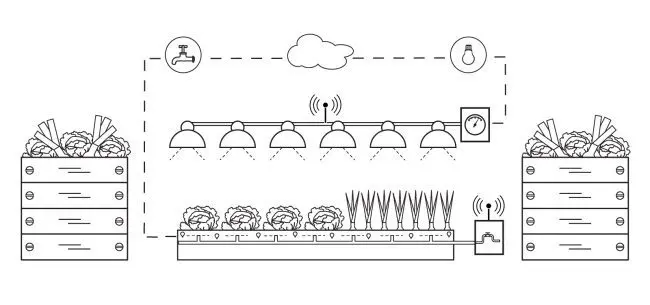
iotji specialists can install a LoRaWAN gateway inside the greenhouse. Thanks to the long transmission range, a single base station can cover the entire farm, and the ability to continuously add new features and connect sensors from different manufacturers allows the creation of a scalable LoRa-based microclimate control system.
In addition to temperature and humidity sensors, the system can integrate devices for monitoring:
Soil moisture and salinity
Door and ventilation window status
Gas concentrations in the air (e.g., CO₂ sensors)
Greenhouse lighting levels
Water and electricity consumption
Building on the existing LoRaWAN wireless network, automatic irrigation and lighting control can be added using wireless actuators.
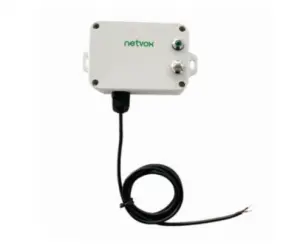
Netvox R718H — pulse counter for monitoring electricity and water consumption
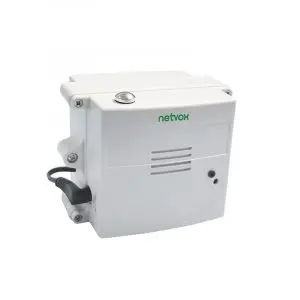
R72615A — sensor for CO₂, air temperature, and humidity
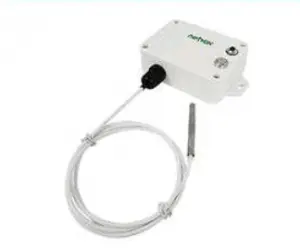
R718AD — wireless temperature sensor
All sensor data is transmitted over the 868 MHz frequency to an LPWAN modem and then to the server. The collected information is accessible to operators or on-duty staff through a web application on a computer or smartphone. In the event of an equipment failure, pipe leak, or short circuit, the application sends instant notifications — for example, via a Telegram bot.
The system continuously analyzes greenhouse microclimate conditions and controls equipment to maintain optimal internal parameters. Automatic analytics on water and electricity usage help farmers plan budgets more precisely, optimize resource consumption, and reduce environmental impact.
The LoRaWAN network can be easily expanded to create a modern vegetable storage system or integrated into energy-saving agricultural projects. To learn more about implementing this solution, simply click the “Order this solution” button below.