
HoReCa
Monitoring Without Invading Guest Privacy
Monitoring Without Invading Guest Privacy
In countryside hotel and restaurant complexes, where guests value privacy and a high level of comfort, the management of building and environmental parameters — from lighting and climate control to heating system operation — must be maintained at an optimal level at all times. Any issue that arises must be resolved within minutes, while staff are not allowed to disturb the guests’ privacy. Some establishments attempt to solve this by automating their facilities with various wired sensors and actuators. However, installing such sensors often compromises interior design and requires additional repair costs. These challenges can be effectively addressed through Internet of Things (IoT) solutions — specifically, LoRa-based equipment offered by iotji.
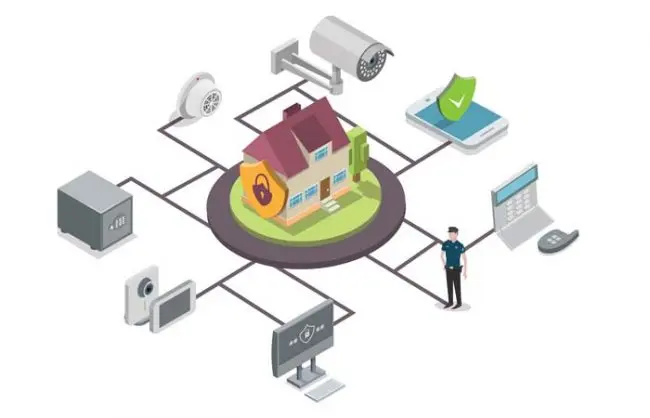
Within the complex, it was proposed to set up a LoRaWAN network, which allows rapid deployment of a wide range of sensors for monitoring building conditions. For instance, wireless temperature and humidity sensors are installed in storage areas, and smoke detectors are placed in all rooms. Additional LoRa devices include window and door opening sensors, smart lighting controllers, and ultrasonic vehicle presence sensors in parking areas. In restaurant buildings, smart detectors are used to detect the presence of rodents, as well as additional carbon monoxide and air temperature sensors. Data from these sensors — powered by batteries designed to last 5 to 10 years — is transmitted via radio to a LoRaWAN gateway. From there, the LoRa base station sends the data over the Internet to specialized software for visualization and monitoring. Access to this information is granted to employees of the complex based on their roles and responsibilities.
A properly organized IoT-based monitoring system for a hotel and restaurant complex minimizes unnecessary staff intrusion into guests’ private space, optimizes employee workflows, and reduces infrastructure maintenance costs. The LoRaWAN network also enables technical accounting of energy resources (electricity, water, gas) for each facility separately, leading to cost savings. Moreover, the installation of wireless sensors — quick and non-invasive — significantly reduces expenses related to interior restoration and hotel reconstruction.