
Industrial refrigeration
Refrigeration Equipment Monitoring
Refrigeration Equipment Monitoring
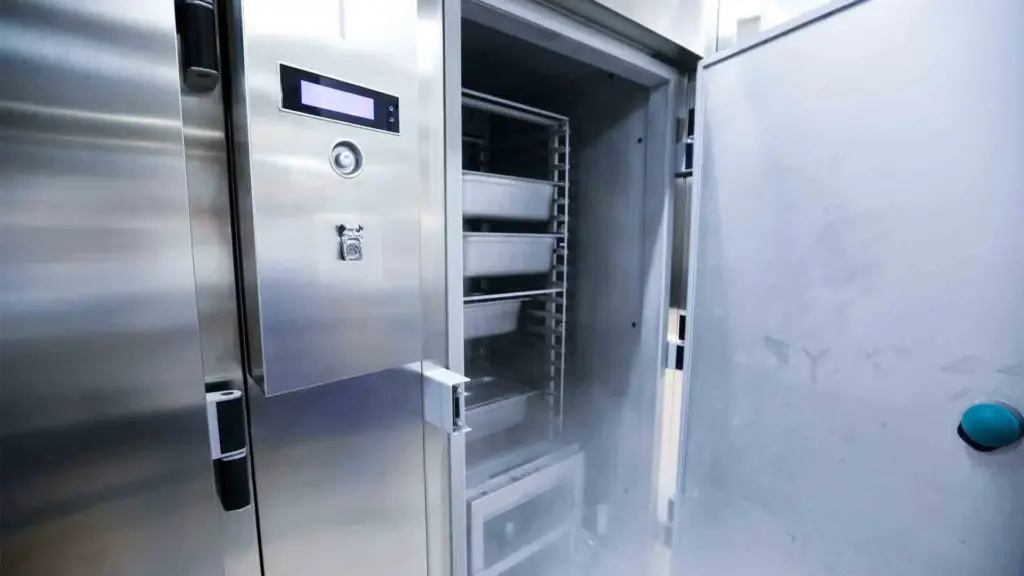
At a food industry enterprise, it was discovered that when refrigerant leaks or system pressure drops, the refrigeration system fails to maintain the required temperature level. As a result, the system’s overall efficiency decreases while electricity consumption increases. Since cold storage units for vegetables must operate continuously, any equipment downtime, service calls, or repairs negatively affect the production process and disrupt the regular shipment of finished products to customers. Therefore, it was decided to install an additional monitoring system for refrigeration equipment operation.
iotji offers a LoRaWAN-based wireless network across the enterprise. In the cold storage rooms, wireless temperature and humidity sensors are installed — specifically designed to operate in low-temperature environments. These LoRaWAN devices do not require any mechanical modification during installation: for example, a temperature sensor for an industrial freezer can be fixed inside the chamber without cables or signal amplifiers. Moreover, the LoRaWAN communication protocol enables data transmission via radio through metal-shielded walls of industrial cold rooms.
We also recommend installing wireless sensors to detect door opening/closing events in cold chambers, as well as current sensors for compressor motors in refrigeration units. All collected data is transmitted through a LoRaWAN gateway and visualized on the ThingsBoard server.
The LoRaWAN technology has made it possible to optimize production processes and ensure their uninterrupted operation. By analyzing the collected data, the system can evaluate the efficiency of refrigeration units and predict maintenance needs before unexpected failures occur.
In particular, LoRaWAN enables remote monitoring of product storage quality, provides control over refrigeration chamber operation modes, and allows for prompt response to equipment malfunctions — thereby reducing the risk of financial and reputational losses due to disruptions in the delivery of high-quality products.