
Street Lighting
Automatic Lighting Project Based on Weather Conditions and Time of Day
Automatic Lighting Project Based on Weather Conditions and Time of Day
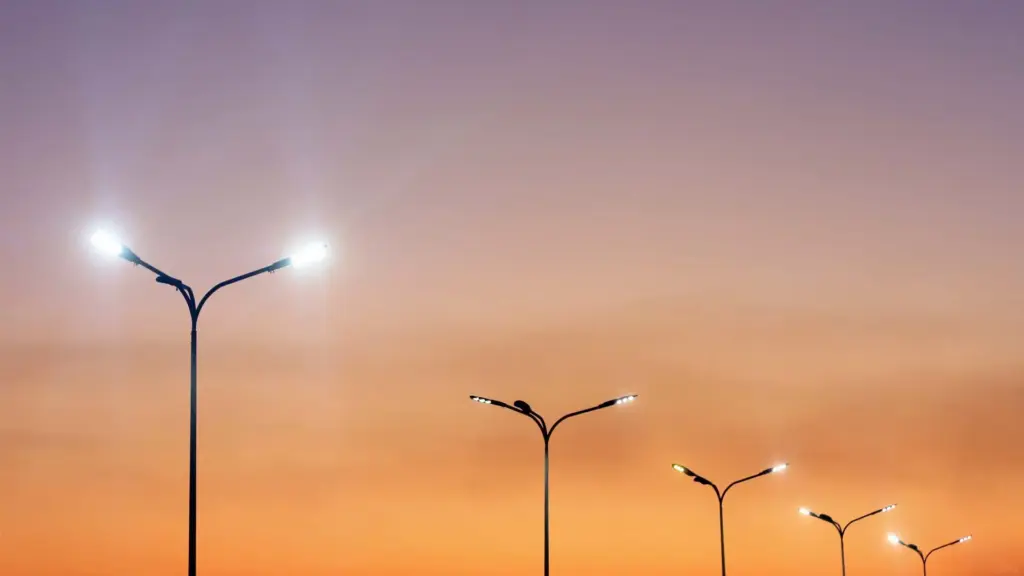
As part of the “Smart City” initiative, the city administration announced its intention to modernize the street lighting system on roads and in the central park. The administration’s main goals were to reduce the number of traffic accidents and to implement an adaptive lighting mechanism that responds to weather conditions and time of day. In the city park, an automated lighting system would reduce the workload of public utility services responsible for park maintenance, while also enhancing the landscape design with dynamic lighting effects.
Our team proposed the implementation of an energy-efficient technology to create an autonomous street lighting system. We suggested installing light sensors on each lamppost, as well as compact weather stations equipped with humidity and temperature sensors. The light sensors collect data on natural light levels and adjust lamp brightness accordingly, while the weather stations gather information about visibility parameters on roads during fog or other challenging weather conditions. Smart lighting in parks, enabled by special sensors, allows for brightness adjustment and can be programmed to alternately turn lights on and off, creating unique lighting compositions throughout the park.
The city lighting automation system was developed using LoRaWAN technology: sensors transmit collected data over the 868 MHz radio channel to base stations with omnidirectional 868 MHz antennas installed in several parts of the city. From there, the data is sent to a network server for further processing. Visualization software installed on the computers of public utility services includes multiple interfaces for system control, allowing operators to manage lighting in the park and on roads independently of each other.
The main expected outcome of the upgraded street lighting system is a reduction in overall energy consumption. Energy-efficient street lighting becomes possible through automatic lamp dimming based on the level of natural light. Additionally, public utility services can respond more quickly to complaints about unlit road sections, since the application server logs every command from each sensor regarding the switching on or off of lights.
Finally, thanks to the openness of the LoRaWAN protocol, the modernized street lighting system can easily integrate additional elements into the “Smart City” network, regardless of complexity. According to our specialists, LoRaWAN has the potential to become the foundation for the expansion of smart city technologies in Ukraine, as it ensures maximum compatibility with already installed equipment, while giving city authorities full freedom in choosing new technology suppliers and contractors for future projects.