
Smart Parking
Supermarket Parking Lot Management
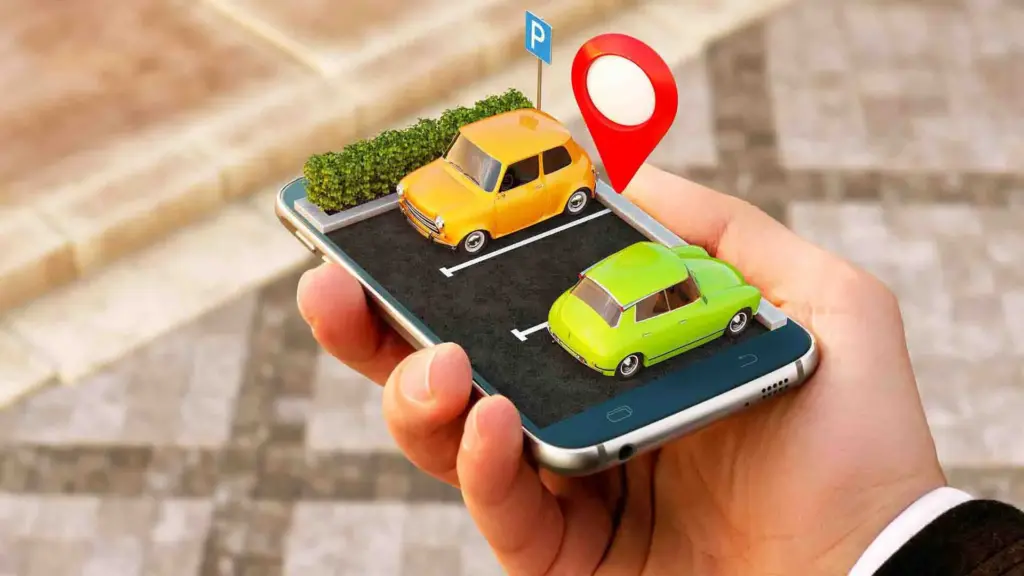
Supermarket Parking Lot Management
Navigation and load control of parking areas are among the key challenges faced by supermarkets and shopping centers. Searching for an available parking spot can take up to 20 minutes, negatively affecting visitors’ willingness to spend money on the premises. Potential customers are often frustrated by the parking struggle, and two-thirds of drivers are ready to leave for another mall that at least displays a board showing the number of free spots.
However, such boards alone do not solve the problem of navigating within the parking lot — what’s needed is a detailed parking map that allows visitors to easily and intuitively find a place to park their car during shopping.
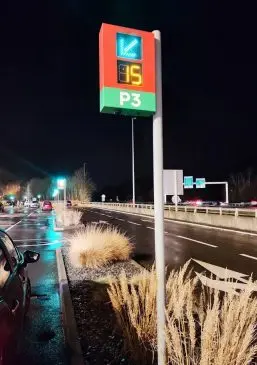
This challenge can be solved through the Internet of Things (IoT). An automatic parking system with real-time visualization operates by installing LoRaWAN-based parking occupancy sensors. LoRa smart parking works as follows: LoRaWAN magnetic sensors embedded in the asphalt transmit data on parking space occupancy via an 868 MHz radio channel to a LoRaWAN gateway. The data is then visualized on a display board or in a mobile app through ThingsBoard PE software.
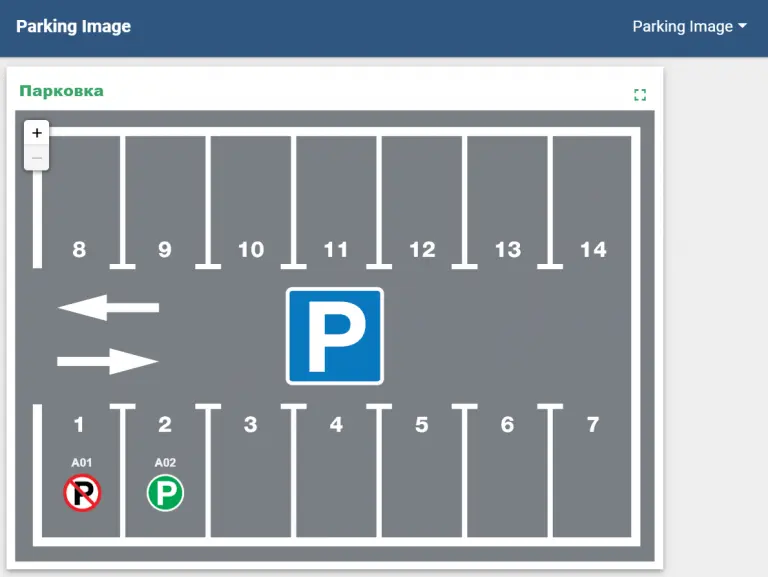
For LoRaWAN coverage, only one gateway is required — it can later connect to several thousand different types of sensors for automation of lighting, access control to service areas, fire safety systems, and more. One of the most notable advantages of LoRa sensors over other IoT systems is their energy efficiency. Since they spend most of their time in sleep mode and activate only to transmit a small data packet at predetermined intervals, they require virtually no regular maintenance. Their operation can be managed remotely: turn them on or off, reflash firmware, or update them — all made possible by the well-designed LoRaWAN ecosystem.
The LoRa smart parking system from Ukrainian system integrator iotji promptly reports the occupancy status of each parking space, simplifying navigation and search for drivers. At the same time, the parking lot owner gains an efficient monitoring system to analyze the facility’s load, as well as the possibility to integrate the parking solution into a broader smart city network.
The versatility and scalability of iotji IoT solutions make it easy to add a smart lighting system for the parking lot to the existing LoRaWAN infrastructure. Security can also be enhanced by configuring motion sensors. Moreover, the Internet of Things network can be extended to indoor spaces of malls and supermarkets — adding water and electricity consumption monitoring, tracking refrigeration unit performance, and monitoring access to service areas, among other applications.